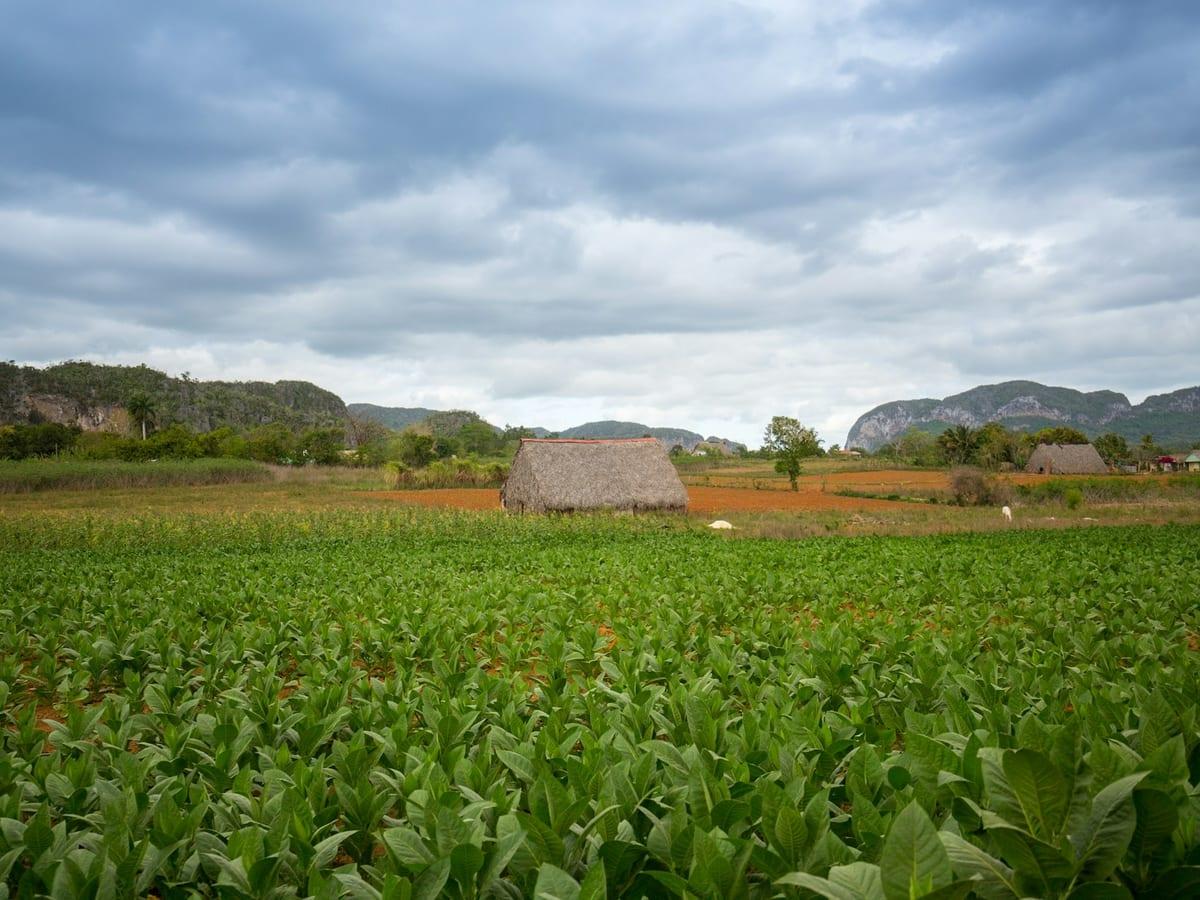
People smoked and cultivated tobacco in Cuba for centuries before Europeans arrived, and the plant the Spanish called *tabaco* has grown there under names and rules of its own ever since. This lesson sets out the ground the other Cuban lessons build on: what terroir means for cigar tobacco, how Cuba's growing land is divided and graded, and what each of its regions contributes. The regions themselves get their own lessons: Vuelta Abajo, Semi Vuelta, Vuelta Arriba and Partido. The Seed to Leaf topic covers Cuba's varieties, and Tobacco Farming covers how the crop is grown.
What terroir means for a cigar
Wine borrowed a word from France; cigars use it the same way. Terroir, from the French *terre*, land, is the claim that a particular soil, climate, slope and even local habit of work put a mark on a crop that cannot be copied elsewhere. For tobacco the claim is concrete. The variety of seed sets what a leaf can become, and soil, sun, water and the grower's methods decide what it does become, as the Seed to Leaf topic explains. Because so much depends on place, the cigar trade names its tobacco by origin: Estelí, Jalapa, the Cibao, Vuelta Abajo. None of these names guarantees a taste by itself, but each carries a pattern blenders learn.
Cuba's own rules take terroir literally. Habanos limits where its tobacco may grow to certain defined regions, zones and districts, and within those to a small number of fields with their own style of cultivation. The word for that field is *vega* (from *veguero*, the Cuban tobacco farmer), and among them the first-class fields, the *Vegas de Primera*, are ranked above the rest for the quality of their soil and microclimate and the skill of their growers.
The soil and climate
The land that suits Cuban tobacco is concentrated in the west. Pinar del Río, the westernmost province, holds the famous zones, and Habanos calls its soil and climate unique in the world. The province grows about 70 percent of Cuba's tobacco. Its soils are a sandy, leached, slightly acid type that Cuban agronomy calls ferralitic, low in organic matter; the dry winter, not the wet summer, is its growing season, so the crop is planted from October and harvested into March. The Seed to Leaf topic describes the varieties, and Tobacco Farming the soils and the dry-season calendar in detail.
What makes a *vega de primera* different is not one secret but a set of them together: the soil's texture and acidity, the way the field drains and catches the sun, shelter from the wind, and a grower who knows the land. The grading is severe, which is the point. A wine region whose whole vineyard counted would not be a denomination worth much; Cuba's is a denomination of the few acres that qualify.
How the growing land is divided
Cuba divides its tobacco land into regions, zones and districts, and protects several as Denominations of Origin, a *Denominación de Origen Protegida* (D.O.P.). Habanos names four growing regions that matter to the brand, each with its own standing. **Vuelta Abajo**, the zone of Pinar del Río called the finest cigar-growing land in the world, is the main source of tobacco for Habanos and the only zone that grows every kind of leaf — wrapper, filler and binder — though even here less than a quarter of the tobacco land holds the Vegas de Primera status needed to grow for Habanos. **Semi Vuelta** is the rest of the Pinar del Río tobacco region outside Vuelta Abajo, grown mainly for binder and filler for short-filler Habanos and for seed. **Partido**, a historic region south-west of Havana, specialises in wrapper. And **Remedios**, in central Cuba, is the oldest tobacco region and the source of the leaf for the José L. Piedra brand.
Two eastern names complete the map without feeding the brand. **Vuelta Arriba** covers the eastern part of the island, where Columbus first saw Cuban tobacco at Bariay in 1492; tobacco is still grown there, but not for Habanos. And **La Habana**, Havana itself, grows no tobacco at all: it is a denomination of origin only because its harbor shipped the cigars and its factories rolled them.
The scale of it
The numbers make the point that this is a small, guarded privilege. In the 2026–27 season the municipality of San Juan y Martínez contracted 1,921 growers to plant about 3,000 hectares, and Cuba as a whole planned a little over 12,000 hectares of tobacco in Pinar del Río. Against that, the wrapper fields are smaller still: Cuba planned about 2,100 hectares of shade-grown wrapper for the 2022–23 season, and even among those only the best pass as wrapper, since a leaf that fails its grades drops to binder or filler, as the Wrappers topic explains.
The rest of the Cuban lessons close in on this map. Vuelta Abajo is the center; Semi Vuelta and Partido are its satellites, one of filler and seed, one of wrapper; Vuelta Arriba is the historical eastern edge. Together they show why a Cuban cigar is a small, tightly bounded thing: a Habano can come only from a few fields, worked in a few ways, and the region's name on it is a legal claim, not a style.