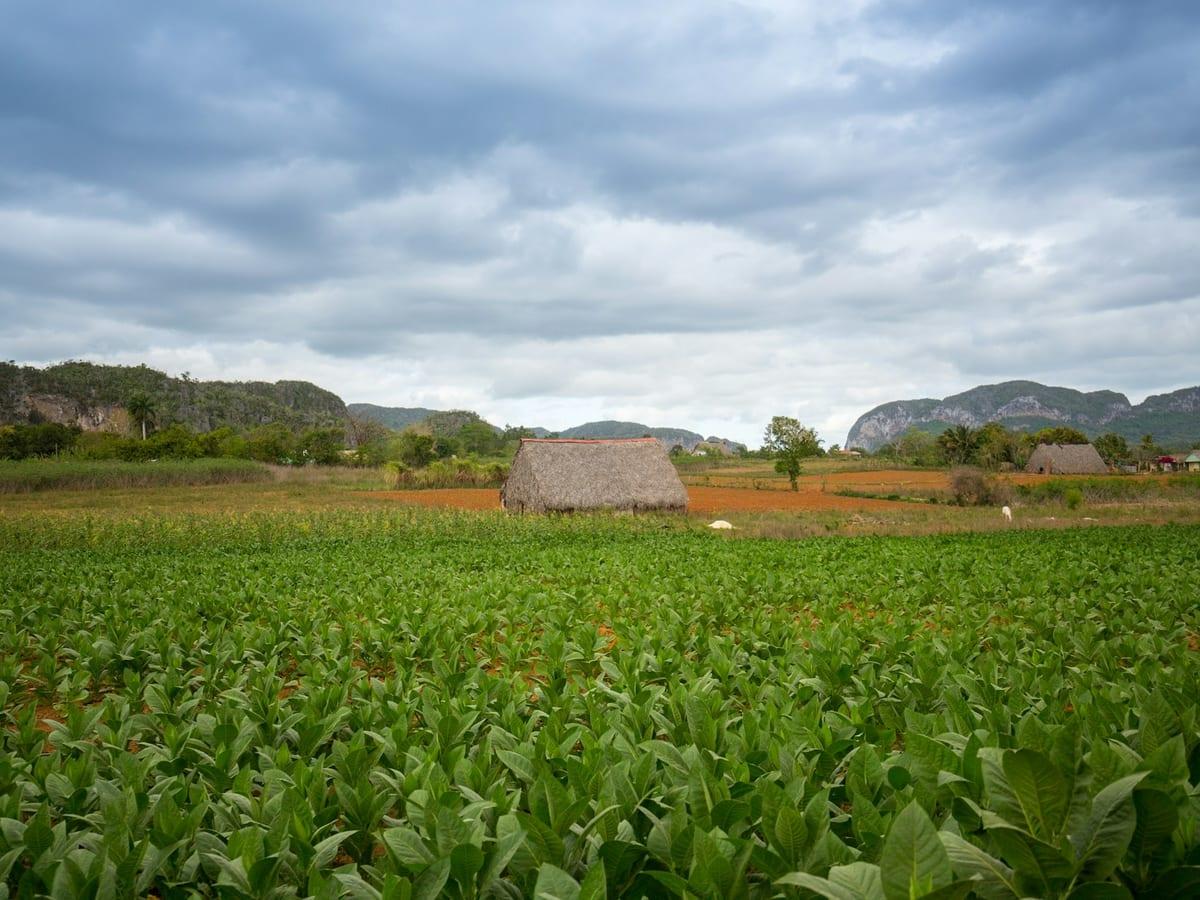
Many of the premium cigars in a humidor were rolled in the Dominican Republic, and most of the rest were influenced by the country's rollers, tools and seed. This lesson looks at the country that sits at the center of non-Cuban cigar making: where its tobacco grows, what is grown and for what, and why a place so central to cigars grows so little of the leaf on the outside. The Cibao Valley, La Canela, San Victor and Mao lessons follow the growing areas, and the Wrappers topic explains why wrapper is so rare there.
The Cibao, the country's tobacco heart
Dominican tobacco grows in the Cibao Valley, a wide, fertile plain in the north of the country around the city of Santiago de los Caballeros. The valley drains through the Yaque del Norte river to the north-west, and its combination of rich soil and a tropical climate with a distinct dry season suits tobacco. Santiago, the country's second city, is its cigar capital: much of the rolling, and most of the tobacco, is within a short drive of it.
The country grows two classic varieties side by side. Olor Dominicano, a native tobacco, is known for mildness and aroma, and comes in local strains with names that record their villages. Piloto Cubano, a Cuban-seed tobacco known for strength, arrived from the Piloto area of Cuba in 1962. San Vicente, a hybrid bred in the country, yields more leaves a plant than Piloto, though some blenders find it less flavorful. The Seed to Leaf topic lists the full set of Olor strains and the newer varieties; here the point is the pairing: a mild native leaf and a strong Cuban-seed one, which Dominican blenders mix to build balanced cigars.
What the country grows, and what it buys
The great majority of Dominican tobacco is sun-grown filler and binder. What it does not grow in any quantity is wrapper, and that shapes the whole trade. Most Dominican cigars wear wrappers from Ecuador, Connecticut or Cameroon, and a large share of the Connecticut Shade grown in the Connecticut River Valley is shipped to the Dominican Republic to be finished and rolled into cigars such as the Macanudo.
The country's rolled cigars are its real crop. The valley around Santiago holds the factories of a long list of makers and the workshops of the country's oldest brands. La Aurora, in Santiago, traces itself to 1903 and is often called the country's oldest maker. The Fuente family, the makers of Arturo Fuente, grow their own tobacco at Chateau de la Fuente and roll in Santiago; Davidoff, General Cigar with Macanudo and Partagás in the United States, and a cluster of family makers, E. P. Carrillo, La Flor Dominicana, Quesada and others, all build on Dominican filler and Dominican hands.
Why wrapper is scarce, and the exception
For years the industry held that good wrapper could not be grown in the Dominican Republic. The country's finest leaf is a mild filler, and wrapper demands a thin, elastic, unblemished leaf that the valley's climate does not easily give. The Fuente family set out to prove the rule wrong. After a failed trial with Piloto Cubano seed, Carlos Fuente Jr. planted 37 acres of Cuban-seed Corojo at Chateau de la Fuente, in El Caribe near Bonao, in 1991, and harvested the first Dominican wrapper in late 1991 and early 1992. The leaf is dark, grown under shade, and it wraps the full-bodied Fuente Fuente OpusX, which premiered in New York on 18 November 1995. It remains the country's signature wrapper, grown on a farm that had reached about 300 acres, some 120 hectares, on four farms by 2023, a small crop set beside the tens of thousands of hectares of filler.
The scale and the climate
Dominican tobacco is a substantial crop grown in a wide range of conditions. In 2025 the country planted about 150,000 tareas, some 9,400 hectares. Much of the native Olor grows on dry land without irrigation, while larger growers irrigate, and the drier north-west relies on canals, as Tobacco Farming describes. The dry corners of the valley matter as much as the rich ones: La Canela, a hot, dry district, gives stronger, spicier leaf, so a Dominican cigar is no longer necessarily a mild one, the point the La Canela lesson develops.
The country, in short, does two jobs at once. It grows the mild, reliable leaf that underlies thousands of blends, and it rolls the cigars. Its wrapper, where it exists, is a celebrated exception rather than the rule. The Cibao Valley lesson takes the growing region itself, and San Victor and Mao the smaller districts around it.