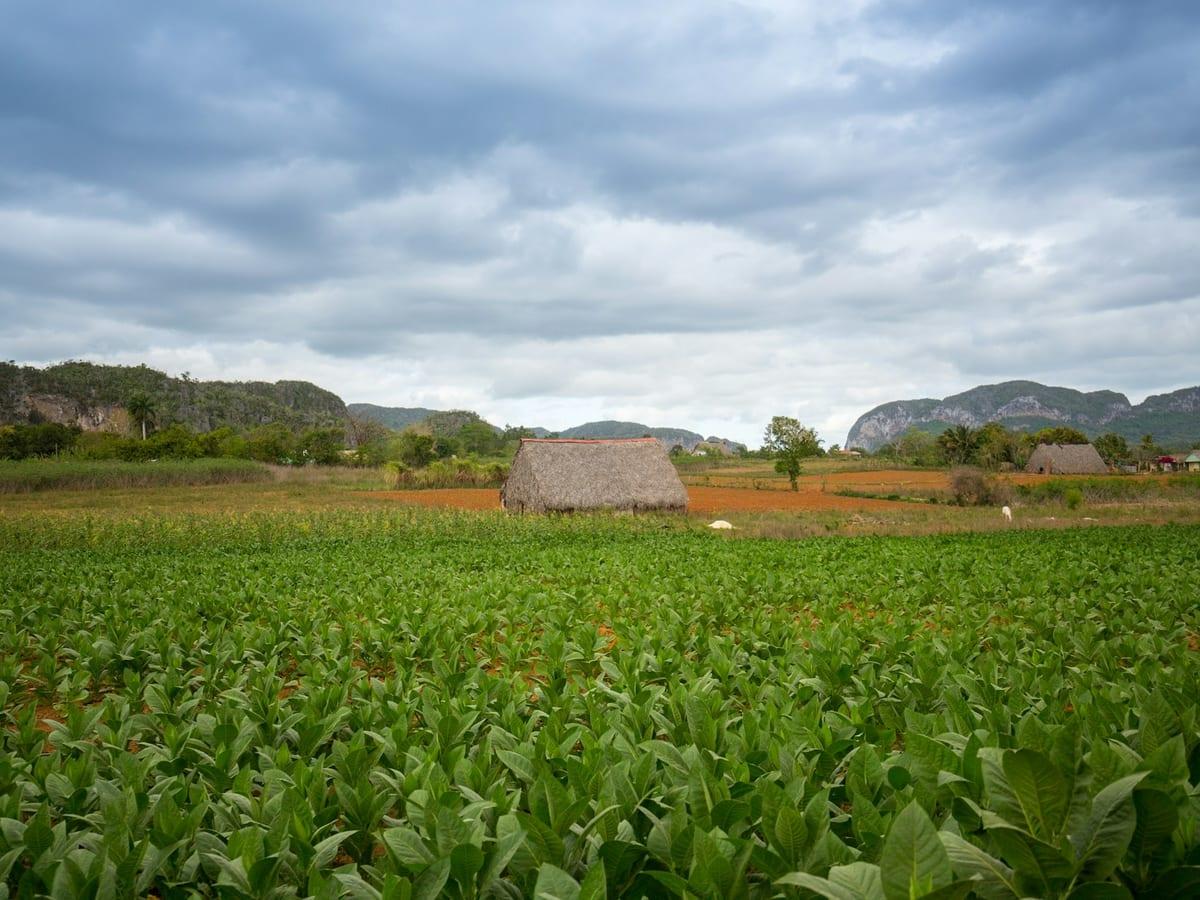
Honduras is a maker's country as much as a grower's, and Jamastrán is where its tobacco, and several of its most important farms and factories, sit. This lesson covers the valley: its soil and climate, what it grows and for what, and the families, the Eiroas, Plasencia, Rocky Patel and others, who work it. Talanga and Copán, the other Honduran valleys, have lessons of their own, and Fillers locates all three.
A hot valley in the south-east
Jamastrán is a valley in the department of El Paraíso, near the town of Danlí, in the south-east of Honduras, close to the Nicaraguan border. It is hotter and more humid than the Honduran highlands, with a long growing season and a deep, sandy soil, and it has long been the country's center of tobacco. The name Jamastrán is a place blenders use the way they use Estelí or Jalapa: as a shorthand for strong, earthy Honduran leaf.
The valley grows mostly sun-grown filler, in large volume, and some wrapper. Its leaf is known for strength and an earthy depth, the character the Fillers topic tags as the Honduran signature, and it feeds the blends of most of the country's makers.
The Eiroas and Corojo
The valley's most famous crop is Corojo, and it arrived with one family. Julio Eiroa brought Corojo seed out of Cuba, in the late 1980s according to his son Christian (other family accounts say 1997), and grew it in the Jamastrán valley, where his family developed the variety by selection rather than crossing, letting the seed adapt to Honduran soil. The family's farm there, El Corojo, gave its name to that work and grew the wrapper for the Camacho Corojo, the cigar that made Honduran Corojo famous; their wrappers give only 30 to 35 percent wrapper-grade leaf, a costly crop, as the Wrappers lesson points out. El Corojo covered about 270 hectares, some 667 acres, in 2019, about 250 acres of it planted, watered by drip irrigation.
The Eiroas remain the valley's defining family. Their other brands, Aladino and CLE, still build on Jamastrán Corojo, and the valley around them is worked by the same mix of makers and contract growers found across Central America, Plasencia and Rocky Patel among them, who grow or buy Jamastrán leaf for Honduran and blended cigars.
Strong filler, some wrapper, many cigars
Jamastrán's place in a blend is usually as the strong, earthy bottom of a full-bodied cigar, the leaf that gives Honduran puros their depth. Plasencia's all-Honduran Cosecha 149 takes filler from Jamastrán along with Olancho and Talanga, and Honduran broadleaf and Corojo from the valley wrap several well-known lines, as Fillers and Wrappers list them. The valley is the workhorse of Honduran tobacco: not the newest ground, but the largest share of it.