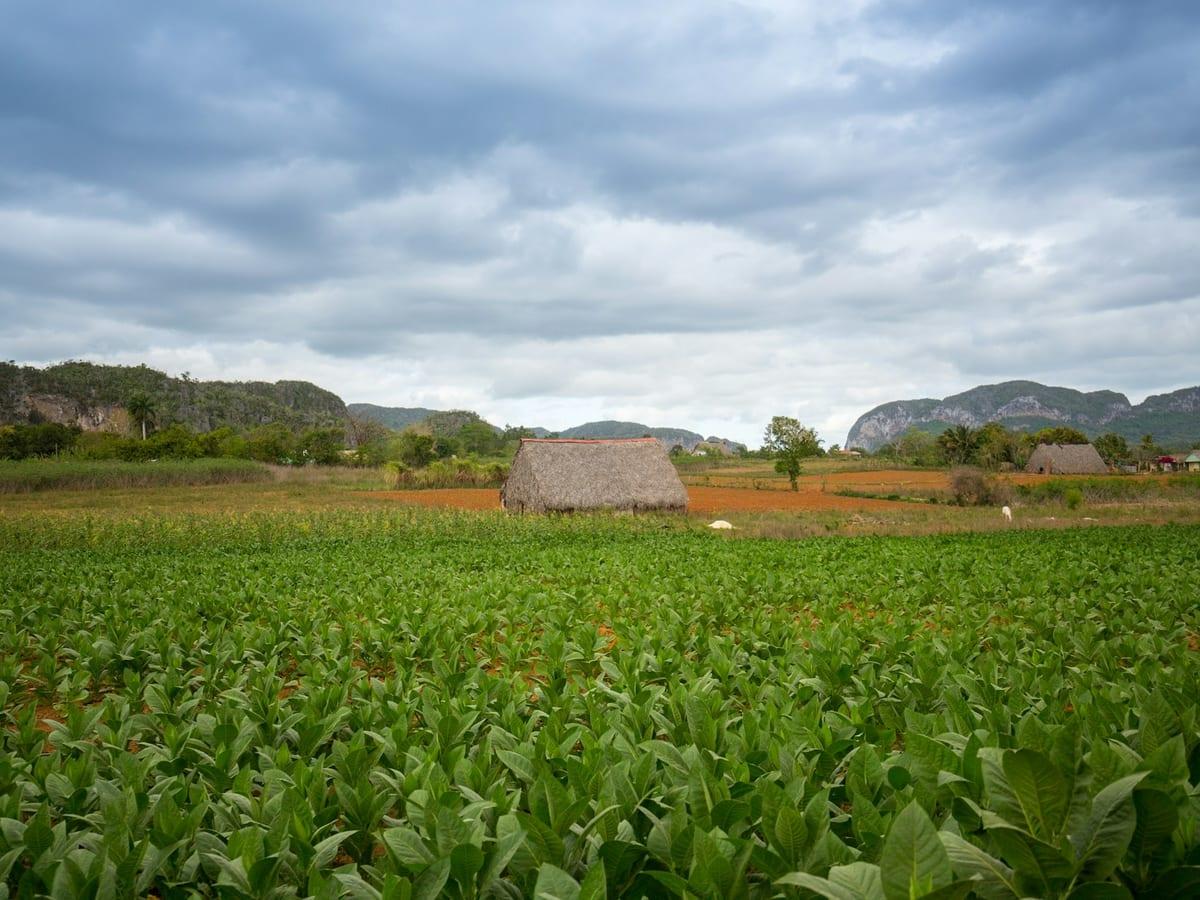
The great years of modern cigar making happened outside Cuba, and above all in Nicaragua. This lesson gives the country-level map: how Nicaragua rose, what its four regions add, who farms them, and it then walks the rest of the cigar world, Honduras, Ecuador, Mexico, Brazil, Cameroon and the smaller origins, so that the region lessons that follow have a frame. Each region named here has its own lesson later; this is the view from thirty thousand feet, and it points to those lessons as it goes.
Nicaragua's rise
Nicaragua's modern cigar industry begins modestly. In 1968 two Cuban exiles, Juan Francisco Bermejo and Simón Camacho, founded the company behind Joya de Nicaragua in Estelí, the first premium handmade brand in the country, built on Cuban methods and Cuban seed; the Somoza family and its partner Daniel Rodríguez came into the business in the early 1970s. The Nicaraguan civil war and a U.S. embargo slowed everything, and then the cigar boom of the 1990s set it loose. Makers rebuilt around Estelí, and the volcanic soil, the dry season from October to June, and seed smuggled or carried from Cuba gave a leaf with power and character. Today Nicaragua is, with the Dominican Republic, one of the two centers of non-Cuban premium cigars.
The four regions
Nicaragua's tobacco is concentrated in the north, and the region matters as much as the country. Estelí, in the north, grows the strongest, most full-bodied leaf, flat and mineral-rich; Jalapa, near the Honduran border, is cooler and wetter with a reddish-brown soil, and grows much of the country's wrapper; Condega sits between them and grows a steady, medium-bodied filler; and Ometepe, an island in Lake Nicaragua formed by two volcanoes, grew only a trial acre as recently as 1994 and now gives a sweet, earthy leaf used for distinctive cigars. Fillers compares the four; the individual lessons take each in turn.
Who farms it
What sets Nicaragua apart is that the cigar makers farm the leaf themselves. Padrón, founded by José O. Padrón and now run by his family, grows its Cuban-seed wrapper in full sun and takes both its natural and maduro from the same plants. Perdomo, My Father with the García family, Drew Estate, Oliva, A.J. Fernandez and Plasencia all grow heavily in Nicaragua; Aganorsa, a leaf company, grows wrapper under shade in Jalapa. Smaller growers farm on contract, financed by the larger companies. Honduras is farmed the same way, often by the same families, Plasencia above all, and the two countries are effectively one tobacco region split by a border.
The rest of the cigar world
The other countries each supply one thing very well, and blenders reach for them the way a cook reaches for a particular spice. Honduras, which Tobacco Farming and Fillers describe at length, grows strong, earthy sun-grown filler and some fine wrapper in the valleys of Jamastrán, Talanga and Copán, and darker wrapper at Trojes and in Olancho. Ecuador grows wrapper, not filler: the provinces of Los Ríos and Guayas lie under a nearly constant cloud cover during the growing season, which does the work of shade cloth, and Ecuador is now one of the world's main sources of wrapper, in Connecticut, Habano and Sumatra seed.
Mexico contributes the San Andrés valley, near the Gulf coast, whose dark San Andrés Negro is fermented into many of the world's maduro wrappers. Brazil gives dark, sweet Mata Fina from Bahia and Arapiraca from Alagoas. Cameroon, with the neighboring Central African Republic, grows a thin, toothy wrapper descended from Sumatra seed. The United States grows Connecticut Shade and Broadleaf in its river valley, sun-grown leaf in Pennsylvania, and a small revived crop in Florida. Peru grows a little filler in the Tarapoto valley, and Colombia a little dark leaf around El Carmen de Bolívar. Each is a single note or two, not a full orchestra; together they are the palette from which most blends are mixed.
This is the map the rest of the topic fills in. Cuba's five lessons come first, because its rules and its example shaped everything after; then the Dominican and Nicaraguan regions; then Honduras, Mexico, Ecuador, the United States, and the smaller origins from Peru to Cameroon and Brazil.