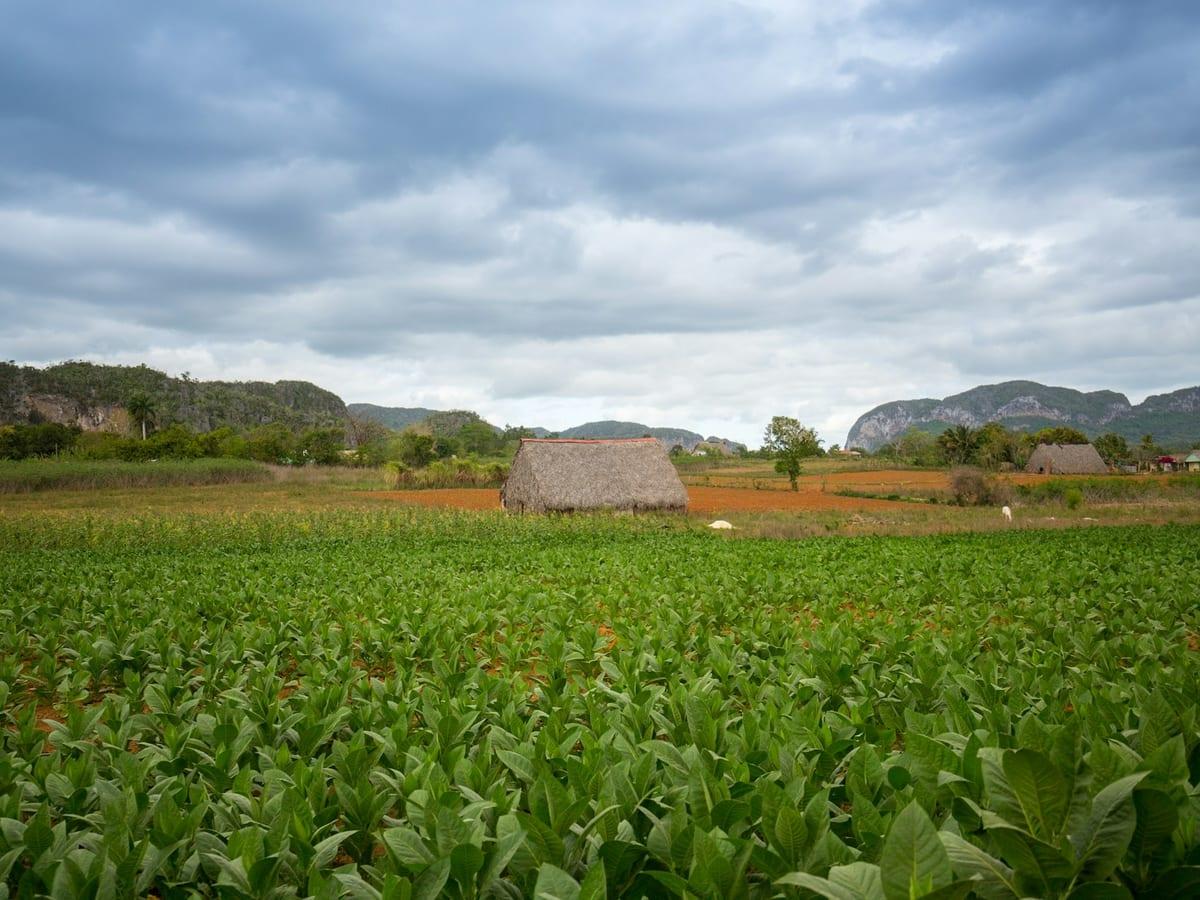
Nicaragua's fourth region is not a valley but an island, and not old farmland but a recent experiment that worked. This lesson covers Ometepe: its geography, how its tobacco is grown, the character of its leaf, and the few cigars built entirely from it. It is the newest and most limited of the Nicaraguan sources Fillers lists, and that newness is part of its point.
An island of two volcanoes
Ometepe is an island in Lake Nicaragua, the great freshwater lake the Nicaraguans call Cocibolca, and it is made of two volcanoes: Concepción, still active, and Maderas, at the island's other end. The two have built a soil of fresh volcanic ash and rock, extraordinarily fertile and free-draining, and the island's tropical climate, wet and warm, pushes the crop hard. The name Ometepe is old, from the Nahuatl for two hills, and the island has been farmed for centuries, but not for cigar tobacco until recently.
That recent history is precisely dated. The Plasencia family planted its first trial acre of tobacco on Ometepe in 1994, and the leaf was judged worth keeping. The plots are small and the ground steep, so the work is done by hand rather than tractor, which suits a leaf meant for a few fine cigars rather than a commodity crop.
A sweet, earthy leaf
Ometepe's leaf has a character of its own: sweet and earthy, with a richness and strength beyond Jalapa's. One Estelí maker described it as the aroma and sweetness of Jalapa leaf with more richness and strength, which is the exact pitch of the island's place in the map: it takes the fine, sweet leaf of the north and thickens it with volcanic heat. The Fillers and Strength lessons note both the comparison and the island's young age.
Because the crop is small, Ometepe is used for cigars that want its distinct character, often announced. The Sicario Linea Ometepe is rolled only from tobacco grown on the island, a single-region cigar in the sense Fillers defines, and Plasencia, the family that proved the ground, works Ometepe leaf into some of its bolder lines. One cigar, one island, one pair of volcanoes.
The newest region
Ometepe matters as a reminder that the cigar map is still being drawn. In 1994 the island was not on it; a single trial acre and a few harvests put it there. It grows little, by hand, on the slopes of two volcanoes, and its leaf turns up in a handful of cigars rather than in the great catalogues. That is a different kind of region from Estelí's factories or Jalapa's wrapper farms, and it is the reason Ometepe is remembered: it is the place that proved Nicaragua still had new ground.