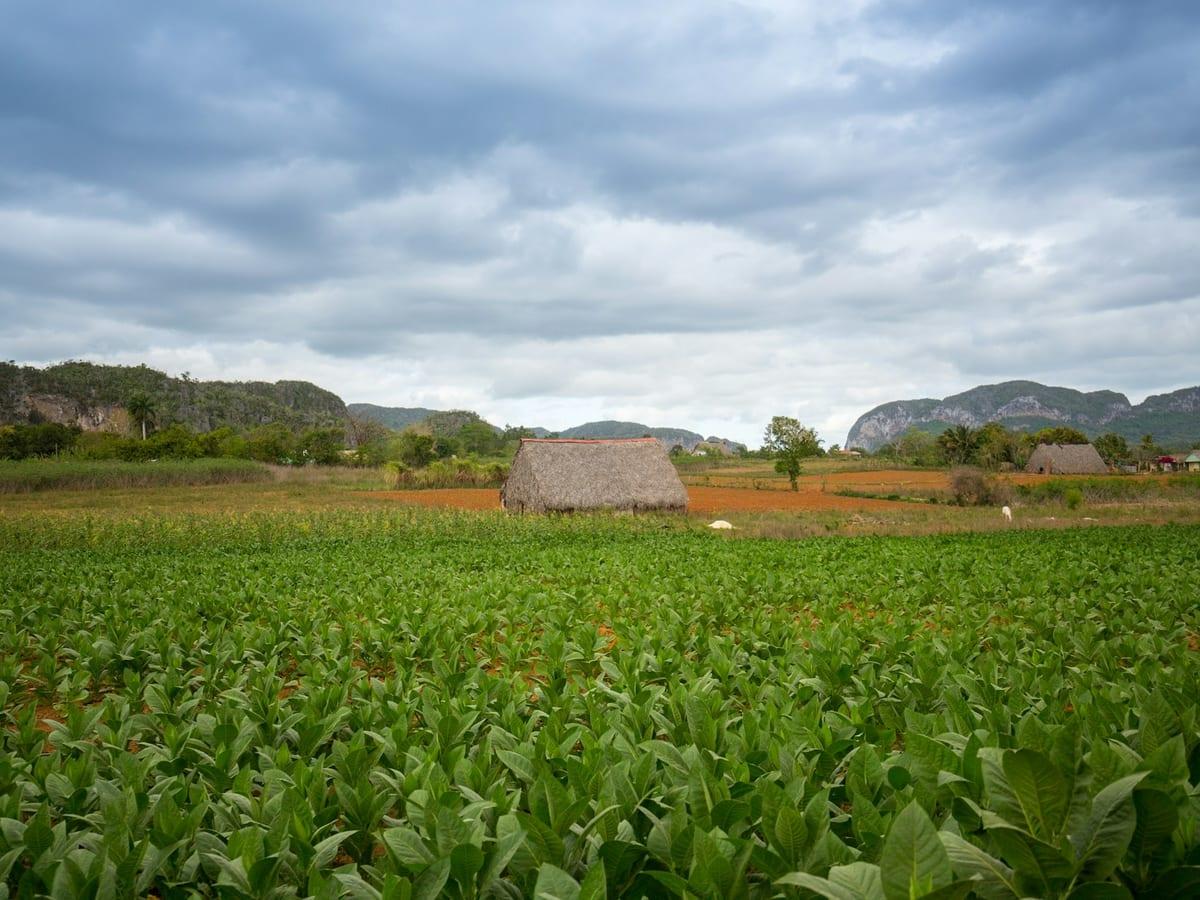
Before the Vuelta Abajo became the name on every band, Havana's cigars drew most of their leaf from the fields behind the city, and that district is Partido. This lesson explains where Partido lies, what it grows and why, and how it fits among Cuba's regions. It corrects a common misreading: Partido is a wrapper region, not a source of coarse binder, and its business has always been the costly outside leaf of the cigar.
A district behind the capital
Partido is the tobacco countryside south-west of Havana, historically, and more recently extending to the south-east of the city. The name comes from the early colonial *partidos*, the districts into which the Spanish divided the tobacco and cattle land around the capital. Habanos dates the region to the early seventeenth century, which makes it, after Remedios, among the oldest of Cuba's tobacco districts. San Antonio de los Baños, one of its old towns, is now the home of Cuba's Tobacco Research Institute, the seat of the country's seed and breeding work, as Seed to Leaf describes.
The region's geography is its fortune. Lying close to Havana, it held the fields that fed the city's factories in the centuries before the railroad and the Vuelta Abajo's rise made Pinar del Río the center. Its soil and its nearness to the humid air off the Caribbean gave it a leaf suited to wrapper, and wrapper has been its business ever since.
A wrapper region
Habanos is direct about what Partido is for: it specialises in the cultivation of wrapper leaves for long- and short-filler Habanos. The wrapper, capa, is the costly, delicate outside leaf, grown in Cuba under cloth in the tents called tapado, and the Wrappers lesson names the two Cuban wrapper regions as the Vuelta Abajo, above all San Luis, and Partido. Partido's wrapper is grown on small farms, tied to the frame and picked leaf by leaf, like every other Cuban wrapper, and it passes through the same grading into the same bales that age under palm bark.
This is the correction that matters most. Some write Partido off as a minor filler region, but Cuban filler and binder come from the Vuelta Abajo, and the short-filler leaf from Semi Vuelta; Partido exists to grow wrapper. The two wrapper districts, San Luis and Partido, divide the crop between them, São Luis at the top of the grade and Partido as the old hand at the trade.
How it fits the map
Partido completes the western picture. The Vuelta Abajo grows everything, Semi Vuelta grows seed and short-filler leaf, and Partido grows wrapper. Together they are the three working regions of the west, each with its own denomination and its own job, plus the eastern names of Remedios and Vuelta Arriba for history. When a Cuban cigar is wrapped, the leaf came from one of two places, and Partido is one of them, growing the outside leaf on ground that has done that same job for four centuries.