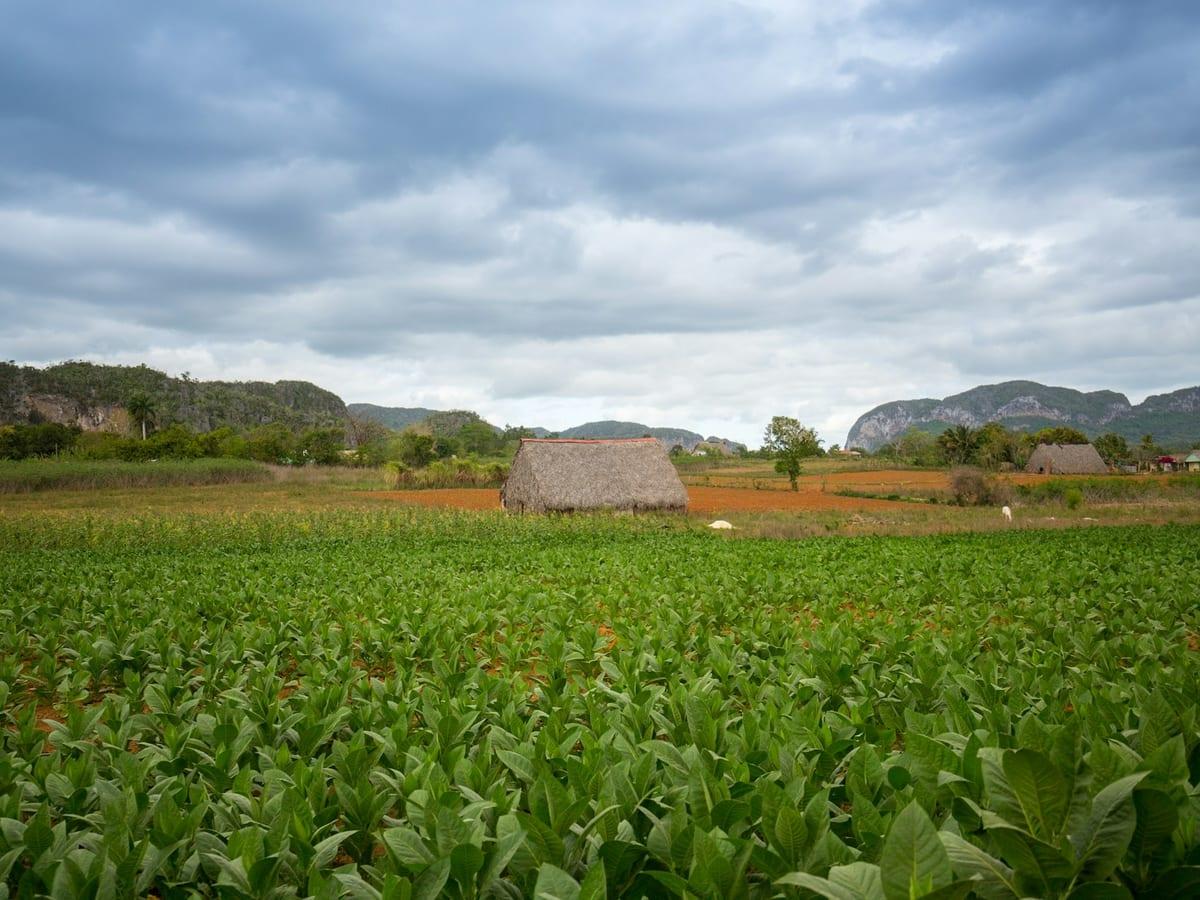
Mexico's cigar leaf is, above all, one dark and useful thing from one valley. This lesson covers San Andrés: its soil and the unusual growing season that comes with it, the dark Negro leaf and how it becomes maduro, and the family, the Turrents, who dominate the valley. Tuxpan, the country's lesser-known northern area, has its own short lesson, and the Wrappers lesson follows where San Andrés leaf ends up.
A valley of black volcanic soil
San Andrés lies in the Sierra de los Tuxtlas, a range of volcanic hills in the state of Veracruz, about 100 miles, some 160 kilometers, south of the port of Veracruz, on the Gulf coast. The valley's soil is volcanic and nearly black, and its fertility shows in one telling detail: it holds so much potassium, the mineral that gives a leaf its elasticity and burn, that the growers add no potassium fertilizer at all, as the Tobacco Farming topic records.
The climate is its own. Where the Caribbean and Central American countries grow in the dry winter, San Andrés plants with the rains, setting out its dark Negro leaf from late June, when the heavy rains begin, and harvesting from September, the reverse of the northern calendar.
The dark Negro leaf, and maduro
The valley's own variety is San Andrés Negro, a thick, dark, sun-grown leaf. It is fermented twice in Mexico after curing, and then often fermented further by the maker who buys it, until it reaches the maduro shade that maker wants; the Wrappers and Color Scale lessons explain how maduro darkens and sweetens a leaf by long, hot fermentation. San Andrés Negro therefore travels far: it wraps all-Mexican cigars such as Te-Amo and Casa 1910, and many made elsewhere, among them Drew Estate's Undercrown Maduro and Herrera Estelí Norteño.
The valley grows more than the dark leaf. The same fields grow Sumatra-seed and Habano-seed tobacco for wrapper and binder, the same Sumatra and Habano families the nursery of Ecuador and Central America, and the Turrents blend their dark San Andrés leaf with Nicaraguan tobacco for added strength in the Casa Turrent 1880. San Andrés, in other words, is a dark leaf plus a supporting cast, all on black soil.
A family's valley
One family defines the region. The Turrent family has grown tobacco in the San Andrés valley since 1880, and by its own account it handles more than half the valley's crop, growing San Andrés Negro, Sumatra-seed and Habano 2000 leaf across the valley's seasons. That continuity, six generations on one patch of black volcanic ground, is as close as the New World comes to the old tobacco dynasties of Cuba.
San Andrés matters because maduro matters. A dark, thick leaf that survives long fermentation is a narrow specialty, and San Andrés grows it better than almost anywhere, so its name stands for a color and a flavor as much as a place.