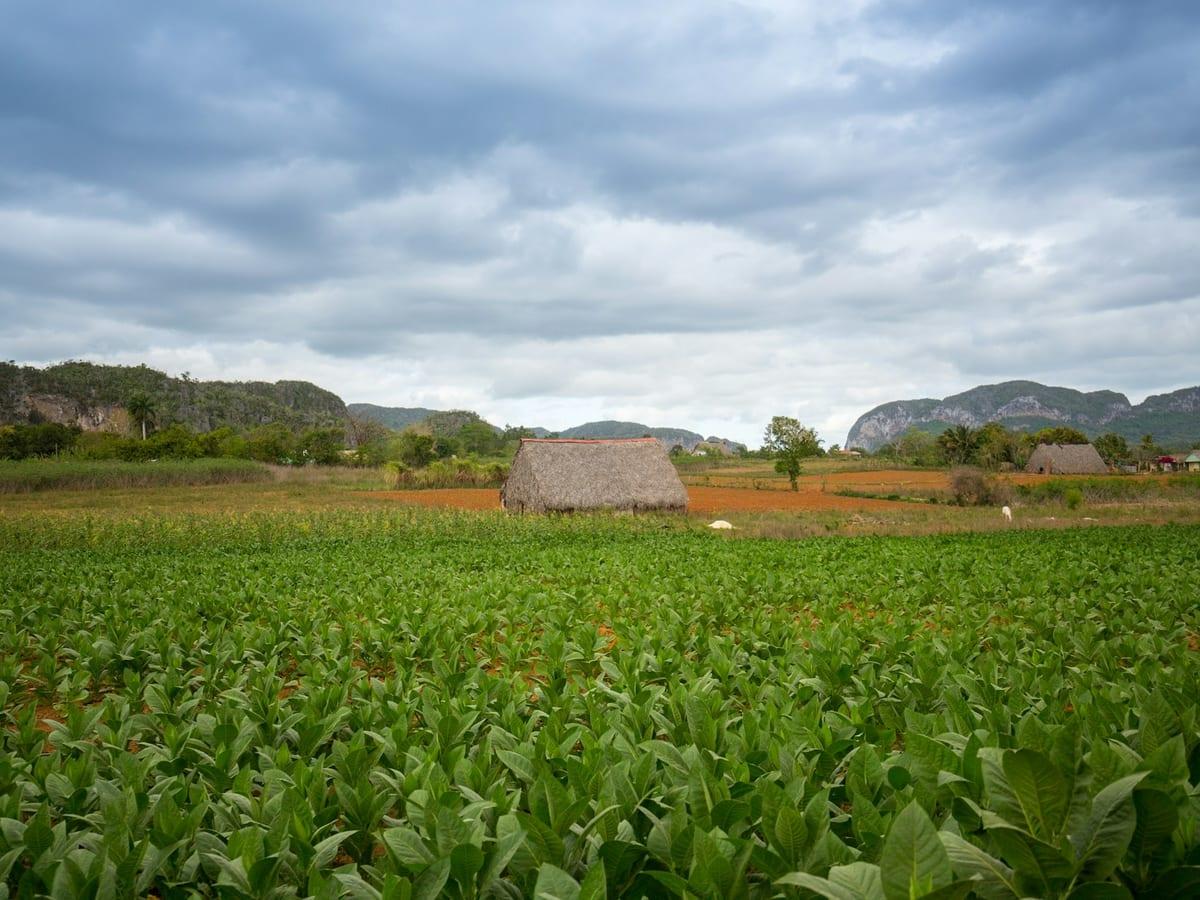
Eastern Cuba grows tobacco, and has for a very long time, but none of it goes into a Habano. This lesson sets out the eastern regions, Vuelta Arriba above all, clears up the common confusion between Vuelta Arriba and the central Remedios region, and explains what each supplies. It is a lesson mostly about history and boundaries, because in the modern cigar trade the eastern regions matter less for what they grow than for where they sit.
The oldest ground for the first sighting
Vuelta Arriba, the upper turn, covers the eastern part of Cuba's tobacco country. Habanos fixes its identity by an event: at Bariay, in the extreme eastern part of the region, Columbus landed in 1492 and first saw Cuban tobacco. That claim is the region's standing, and it is protected as a denomination of origin on the strength of it. In his journal of the first voyage Columbus recorded men carrying what the Taíno called leaves they smoked, wrapped and rolled; the name they gave it, cohiba, later became a brand name, as the Cigar History topic recounts.
For all that history, the region's tobacco has a lower rank in the present. Habanos says plainly that tobacco is still grown in Vuelta Arriba, but not for Habanos. The eastern crop goes to the same ordinary uses as most of Semi Vuelta's: domestic cigarettes and common cigars, the leaf outside the protected system.
Remedios, the central region that is not Vuelta Arriba
The confusion to clear up is this: the name Vuelta Arriba is often stretched over all of central and eastern Cuba, but Habanos keeps two regions separate. Remedios, in central Cuba around the town of the same name in Villa Clara province, is Cuba's oldest tobacco-producing region and a denomination of origin in its own right, and it is the source of the leaf for one particular Habano brand, José L. Piedra, which is made entirely by hand with short filler, tripa corta. Remedios grows for the brand; Vuelta Arriba does not. The two are neighbors, not synonyms, and the Fillers topic keeps them apart the same way.
What the eastern region contributes
Set aside the smoke, and Vuelta Arriba still matters to the story. It is where the crop was first seen by Europeans, the eastern edge of a plant that then traveled the world along the same Atlantic routes. The proof of its age is in the map: the denomination exists for historical reasons, not for the leaf it now ships. Cuba's usable premium tobacco lives in the west; the east keeps the memory of the beginning.
So Vuelta Arriba is best understood as a boundary line and a birthplace, not a source. Its lesson is the map's: Cuban premium tobacco is bounded in the west, and the farther east the name, the more it is history and the less it is leaf.