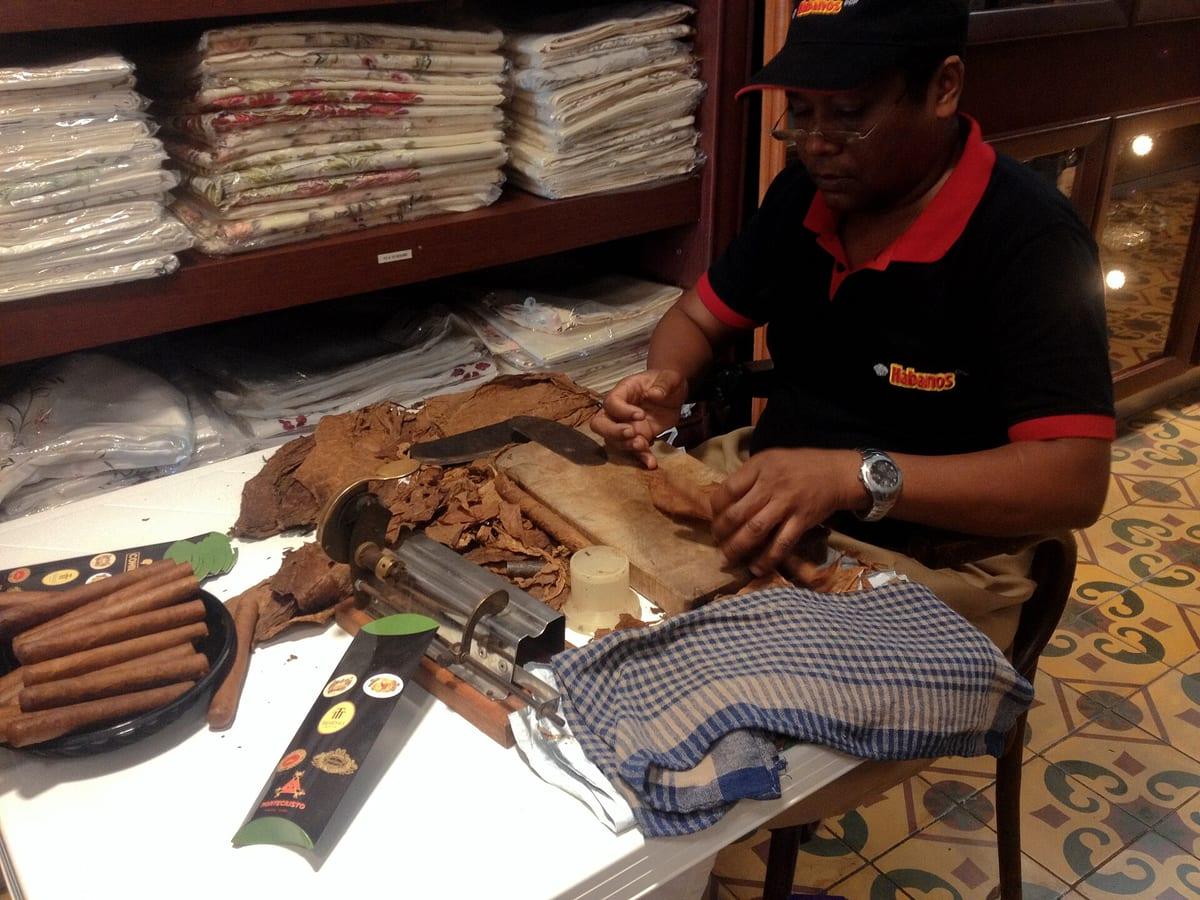
Quality control is not one desk at the end of the line. It runs from the moment the leaves are gathered, and it ends in the mouths of the tasters. This lesson follows the checks a cigar passes between the rolling table and the box, as Cigar Construction's Pressing and Finishing describes them from the cigar's side.
The jefe de galera and the supervisors
The first check is on the rolling floor, the galera. The workshop manager, the jefe de galera, supervises the work of the rollers, and supervisors who are themselves top-grade torcedores oversee each brigade of 30 to 40 workers, watching their technique and checking the dimensions of the cigars as they are made. Each finished cigar is placed in a cajuela, an open-fronted wooden box, labeled with the torcedor's number, the factory name of the size and the date, so that every cigar can be traced back to the pair of hands that made it.
Weighing, measuring and taking apart
From the rolling floor the cigars go to the quality control department, where technicians check each one for weight, length, girth, consistency, construction and appearance, with particular attention to the tightness of the wrapper and the finish of the cap. The size is checked against the cepo, the wooden gauge. Weight matters because a cigar heavier than it should be usually holds too much filler and draws tight. Samples of each torcedor's work are regularly taken apart to verify how the cigar was built inside and that the blend is right. When problems are found, the cigars are deducted from the roller's daily quota, a serious matter for rollers paid by the piece.
The draw machine
The most revealing test is the draw. A machine draws air through the pressed bunch by suction, after the bunch has been pressed in the mould and before the wrapper is added, and it catches a cigar that would be plugged or too loose before a wrapper is spent on it. Habanos introduced the machine at the end of 2001 and now uses it in every factory. Its effect can be measured outside Cuba too: at Tabacalera de García in La Romana, in the Dominican Republic, which makes cigars such as the non-Cuban Montecristo, the share of cigars rejected as plugged fell from about 35 percent in the late 1980s to 2 or 3 percent once the factory had a draw machine, and makers such as Perdomo say they draw-test every cigar.
The catadores
The last judge is the palate. Every Cuban factory has its team of tasters, the catadores, who meet every day and score cigars on a six-point list for draw, burn, aroma, flavor, strength and overall quality, three to five cigars at a sitting, and who recommend adjustments to the blend if anything strays from the brand's character. The best of them sit on the Comisión Nacional de Degustación, the National Commission for Tasting, which is part of Cuba's Tobacco Research Institute and, with the Regulatory Council, sets the guidelines for quality and for the consistency of the blends. Outside Cuba the same idea holds: factories run their own tasting panels, and a maker can pull a cigar from inventory if it falls short. Cigar Construction names the faults that still slip through and how to spot them.