Lessons
- 1Tobacco Farmers — Vegueros9 min readA veguero is a cigar tobacco farmer, and the word comes from vega, the Spanish for a fertile tobacco field. In Cuba the term is also a mark of standing, because Habanos reckons that a veguero on the finest farms may have charge of half a million plants or more and visits each one more than 150 times in a season. The work is still largely done by hand, and Cuba's tobacco industry employs about 200,000 people, rising to 250,000 at the height of the harvest. Beyond Cuba the same craft is practised by family growers in the Dominican Republic and Honduras, by large grower-factories in Nicaragua, by migrant workers in the Connecticut Valley and by small farmers in Cameroon, and every cigar begins with the decisions the grower makes long before a leaf is picked.
- 2Curing & Fermentation Workers7 min readBetween the field and the rolling table, cured and fermented tobacco is the work of two trades that almost no one outside the factories sees. Curing workers hang the fresh leaf in the barn and keep the air moving until it turns from green to yellow to brown, and fermentation workers pile the cured leaf into pilones, the stacks that heat up on their own, and turn them until the harshness is out. In Cuba the later fermentations happen in two named houses, the escogida and the despalillo; elsewhere they happen in the makers' own processing warehouses. The work is both an old craft and a piece of chemistry, and the workers who do it decide much of what a cigar smokes like.
- 3Sorters — Tobacco Classification Specialists8 min readOnce tobacco is cured and fermented, every leaf has to be read and assigned a job, because the wrong leaf in the wrong place can spoil a cigar's burn, draw, look or taste. In Cuba this happens at the escogida, the sorting house where all leaf is classed as wrapper, binder or filler, and at the factory, where pairs of color graders called escogedores match finished cigars into dozens of shades so that every box looks alike. Sorting is hand work, judged by eye and fingertip, and a single visible defect can send a wrapper leaf down into the binder pile.
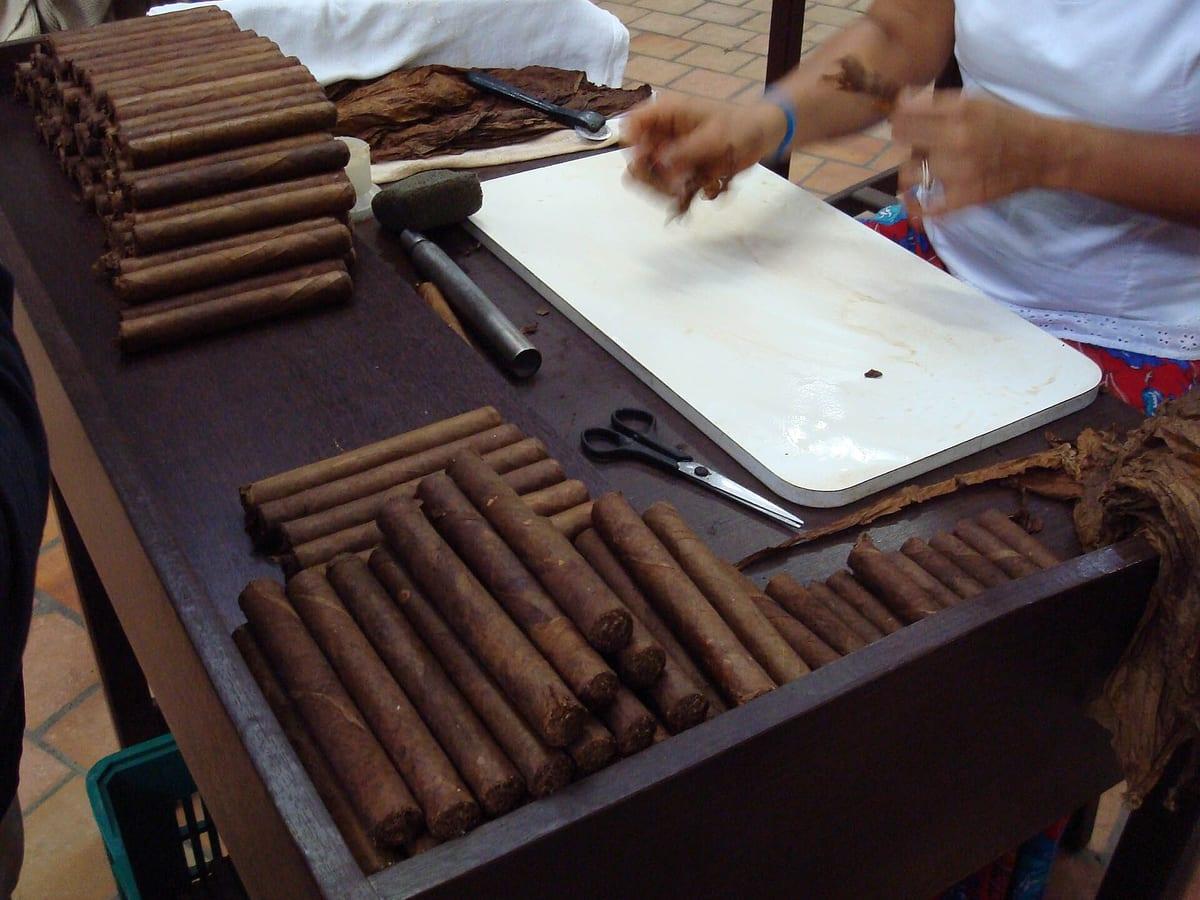
- 4Torcedor — Cigar Roller / Cigar Artisan9 min readThe torcedor is the cigar roller, the person who turns a pile of leaves into a cigar, and the best-known worker in the trade. The name comes from torcer, "to twist", yet twisting is the one thing a roller must not do when making a cigar: the leaves are folded and rolled, never wrung. In Cuba one torcedor builds each cigar from start to finish, while in Nicaragua, the Dominican Republic and Honduras the work is usually split between a buncher and a roller. There are four grades of torcedor, the top grade alone rolls the largest and most difficult sizes, and most torcedores today are women.
- 5Control de Calidad — Quality Control Specialists7 min readBefore a cigar leaves the factory, someone decides whether it is good enough to carry the brand, and that is the work of quality control, the control de calidad. In a Cuban factory the supervisor, the jefe de galera, watches the rollers, and supervisors who were themselves top-grade torcedores check the dimensions of each brigade's work; technicians then weigh, measure and inspect every cigar, and a machine tests the draw of the pressed bunch. After all of that, the factory's tasters, the catadores, smoke the work every day and score it. Cigars that fail at any point never become Habanos.
- 6Packaging & Humidor Workers34 min readBetween the rolling floor and the shop, a cigar passes through a second set of hands. It rests first in the escaparate, the factory's conditioning room, until it has lost the moisture it took up during rolling. Colour graders, the escogedores, then match it to its neighbours; a bander, the anilladora, puts on its band; and it goes into a box that other workers cut, dressed and sealed. This lesson follows that work in Cuba, the Dominican Republic, Nicaragua and Honduras.
- 7Master Blender31 min readThe master blender decides what goes into a cigar. In Cuba he is the ligador, and each factory's blending room assembles his recipe, the ligada, and issues it to the rollers every day. Outside Cuba the blender is often the owner of the company, or a senior employee whose name smokers know. Everywhere the work is the same: choosing leaves by plant position, farm and harvest, testing them in sample cigars, and keeping a blend recognizable from one crop to the next.