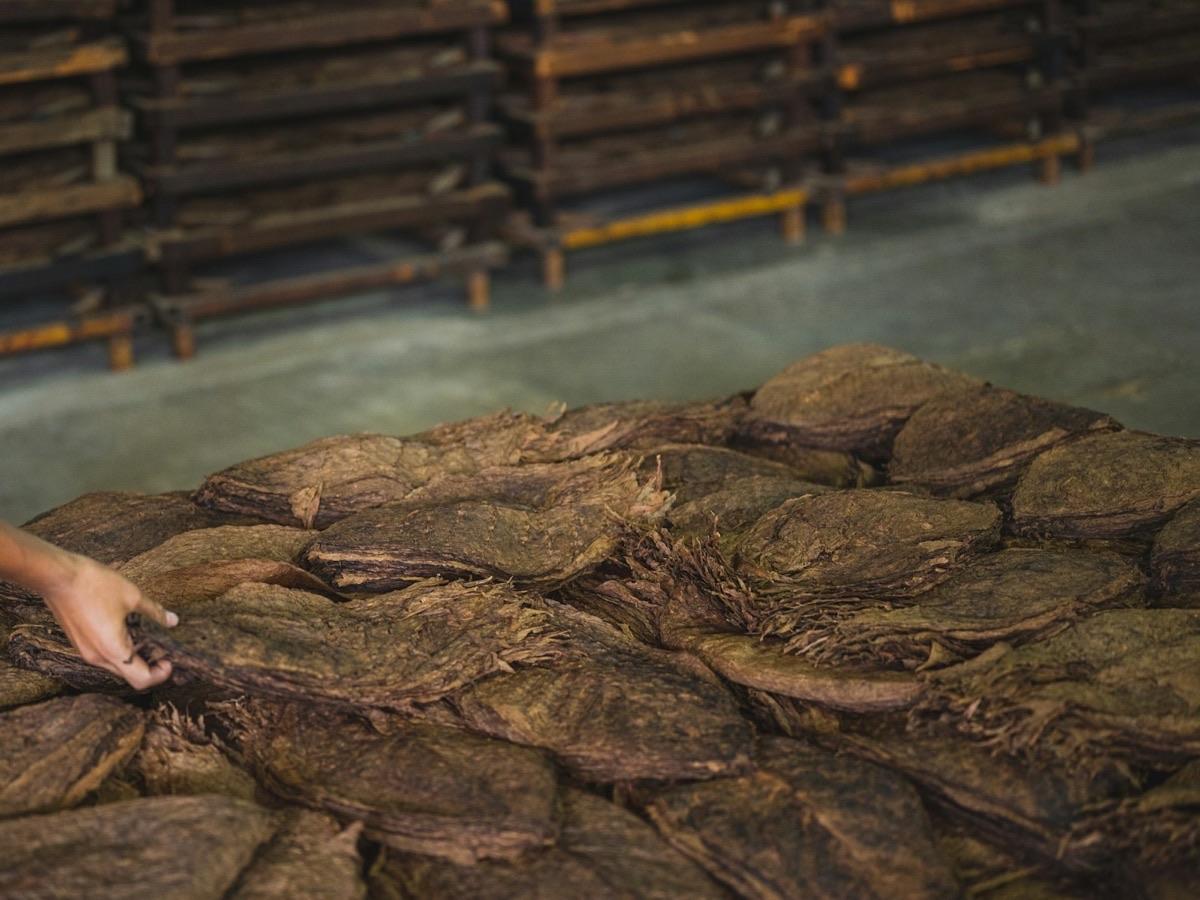
A wrapper's color is the first thing anyone notices about a cigar, and the trade has a scale of Spanish names for it, running from green to almost black. The names are used around the world, but makers draw the borders between them differently, and countless shades fall between each step. This lesson explains the scale, what gives a wrapper its color, how a maduro is made, how Cuban practice differs, and what color can and cannot tell you.
The scale
The table gives the usual names from lightest to darkest, with the shade each describes.
| Color | Shade |
|---|---|
| Candela | Green, dried quickly with heat to keep its chlorophyll; also called double claro |
| Claro | Light tan, typical of Connecticut Shade |
| Colorado claro | Light to mid brown |
| Colorado | Mid brown with a reddish tint; reddish shades are also called rosado |
| Colorado maduro | Dark brown |
| Maduro | Very dark brown, almost black |
| Oscuro | Almost black, the darkest; some makers call it double maduro |
Broadly, the darker the wrapper, the longer and hotter it was fermented, although seed, sun and the leaf's place on the plant play their part, as the next section explains. The names are plain Spanish: claro means light, colorado reddish, maduro ripe and oscuro dark, while rosado, rose-colored, is used for reddish shades of colorado.
Two older market names also survive. In the U.S. trade, a medium-brown wrapper was called natural, or EMS, for English Market Selection, and the green candela was AMS, for American Market Selection, a name coined by the main importer of Cuban cigars. Natural is still common on labels, for the light to medium browns.
What gives a wrapper its color
A wrapper's color comes from several things, which add up. The seed sets a range: Connecticut seed cures light and golden, while Cuban-seed leaf and broadleaf can turn much darker. Sun darkens and thickens the leaf, so shade-grown wrapper is usually lighter than sun-grown. The leaf's place on the plant matters, because the upper leaves get the most sun and are naturally darker. Curing turns the leaf from green to brown, and fermentation darkens it further and brings out its sugars; the longer and hotter the fermentation, the darker the leaf.
All of this happens naturally. Habanos stresses that the colors of its wrappers come from the leaf and the way it is fermented, with no artificial process, and that the leaves from the upper levels of the plant are naturally darker.
Candela
Candela, also called double claro, is the one color made by a different process. The green leaf is dried in the barn with heat for 60 to 72 hours, which fixes its chlorophyll before it can turn brown, and it needs no fermentation or aging afterwards. Because the process makes the color, candela can be grown in many countries from many seeds. From about 1958 to the early 1970s, nearly all the billions of cigars Americans smoked wore candela wrappers, but the fashion faded, and today candela is a rarity. It tastes of grass and fresh green leaf.
Maduro and oscuro
Maduro means "ripe", and a true maduro wrapper is not simply a dark leaf. It is a leaf fermented longer, and usually at a higher heat, than a natural wrapper, often for six to nine months, which darkens it and brings out its natural sugars. The result tastes richer, earthier and sweeter, with notes of cocoa, coffee and dark chocolate. Thick, sun-grown leaf stands up best to this treatment, so most maduro comes from a few hearty varieties: Connecticut Broadleaf and Mexico's San Andrés Negro above all, with Brazil's Arapiraca and Mata Fina and Nicaraguan sun-grown leaf. Maduro was once made only from the highest leaves of the plant. Oscuro takes the process further still, with fermentation that can last up to a year, and gives the darkest wrapper of all.
There are shortcuts. Some factories speed up the process by adding heat, moisture or pressure, and some blast the leaf with steam to darken it within a day; a few have even dyed their leaves. A dark color alone therefore does not prove that a wrapper went through a long fermentation.
Color in Cuba
Habanos uses five names, from claro through colorado claro, colorado and colorado maduro to maduro. Until the 1970s some Cuban factories marked the color of the cigars on the box, CCC for claro, CC for colorado claro and C for colorado. Cuban wrapper leaves are graded into some 50 categories by size, color and texture before rolling, and after rolling the escogedores, the color graders, sort the finished cigars into 60 or more shades and arrange each box so that the tones run from dark to light, left to right.
Before 2007, Cuba made some dark cigars but sold none as maduros. That changed with Cohiba Maduro 5, presented in February 2007, whose wrapper comes from the upper leaves of the plant, aged for five years and fermented entirely naturally. Partagás Maduro No. 1 followed in 2015, with a wrapper from the top of the plant given an extra fermentation.
Color in the box
Makers sort cigars by color so that every cigar in a box looks the same. The match is about appearance, not flavor: a slightly lighter or darker cigar in the same box comes from the same blend. A few cigars mix colors on purpose. A barber pole, also called a candy cane or double wrap, winds two wrappers of different colors around the cigar in spiral stripes.
What color tells you, and what it doesn't
Color is a fair guide to a wrapper's character. Light, shade-grown wrappers usually taste creamier and milder, and the long fermentation of a maduro makes a wrapper sweeter and richer, as Wrapper's Influence on Body explains. But color describes the wrapper only, and the strength of a cigar comes mainly from its filler. A maduro does not grow stronger as it darkens; it becomes richer in body and a little sweeter. A strong filler under a pale wrapper gives a cigar that is light on the palate but full in effect, and many maduros are only medium in strength. Read the color as a clue to flavor, not as a strength rating.